
Churches first. Nonprofits second.
Automation for organizations whose work lives between systems.
Built first for church operations, then nonprofits, with specific paths for operations, marketing, finance, and admin teams.
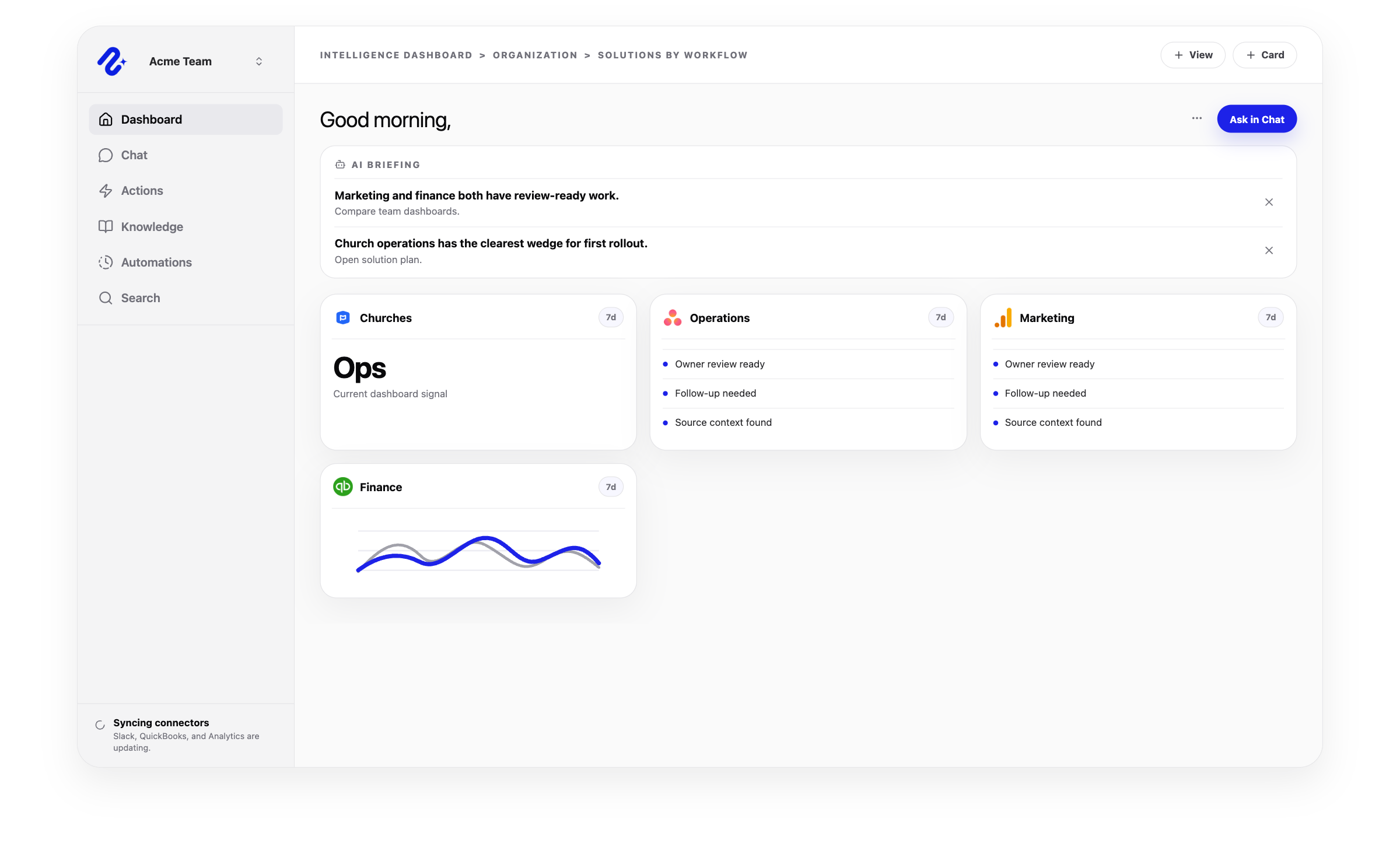
Solutions by organization and team
Start with the workflow that has a real owner.
church operations software
Church Operations Software
Connect Planning Center and your church tools to automate recurring reports, volunteer coverage checks, ministry follow-up, and administrative workflows with Nurii.
Explorenonprofit workflow automation
Nonprofit Workflow Automation
Connect nonprofit programs, donor systems, volunteers, finance, communications, events, and shared knowledge to automate reports and reviewable follow-up.
ExploreAI operations platform
AI Operations Platform
Use Nurii to connect tools, centralize knowledge, monitor dashboards, automate reporting, and turn AI answers into reviewed actions.
ExploreAI marketing operations
AI Marketing Operations
Nurii connects campaign analytics, content calendars, CRM context, email performance, website updates, and team knowledge for marketing teams.
ExploreAI finance operations
AI Finance and Admin Operations
Nurii gives finance and admin teams an AI layer for invoices, bills, payments, approvals, reporting, and cross-tool operating context.
ExploreSolutions FAQ
Questions about where Nurii fits.
Who is Nurii primarily built for?
Churches are the primary audience; nonprofits are second. The platform also supports operations, marketing, finance, and admin workflows.
Can Nurii support more than one department?
Yes. Teams can share context, dashboards, AI chat, reports, and reviewed follow-up across existing tools.
Do we need to replace our current software to use Nurii?
No. Nurii adds answers, reports, automation, and reviewed action around existing tools.
Where should a church start?
Start with one report, coverage check, event review, or follow-up workflow. Define its sources and reviewers.
Start with one recurring workflow, not a company-wide AI project.
Map its sources, audience, delivery, and review boundary.